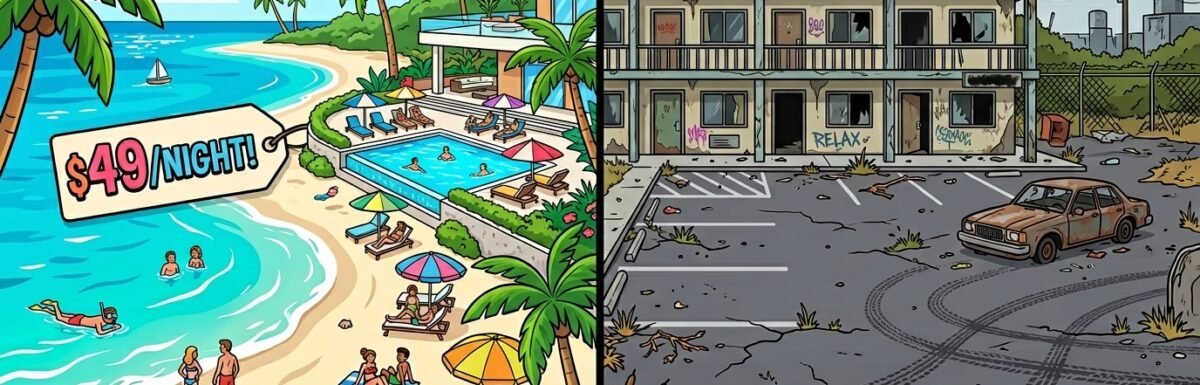

Spring is here, which means it’s time to start plotting that perfect summer escape—mountains, beaches, or a big city with room service and questionable parking. For us, that vacation is a road trip through the National Parks in Utah. I’m sure it’s different for you, but before you pack your bags (or even just your imagination), there’s one modern travel companion you didn’t ask for: scammers. For them, business is booming. Every year, they separate well-intentioned travelers from their hard-earned cash—often before the trip even begins. So before you book that suspiciously cheap beachfront rental, let’s talk about summer travel scams and what you’re really up against.
Fake Travel Deals and Scams
This scam hits the sweet spot of making lots of money for a scammer while completely ruining your vacation. Imagine finding a truly amazing deal on your dream vacation, planning your entire trip around this deal, and then discovering at the last minute that it’s a fake. These deals hook you with the idea of a great trip—then quietly separate you from your money before you ever leave home.
As you go through the process of booking, everything looks legitimate—professional photos, logos, even “customer reviews.” The only problem? You’ve got to act fast. And, you’ve got to pay via some very “final” types of payment—wire transfer, gift card, or Zelle. Remember, once you pay with any of these payment types, that money is gone for good.

Variations on Summer Travel Scams
The amateur scammers follow the pack, but the good ones love to get creative. Here are a few popular twists they’ve come up with:
- Bait-and-switch: The deal exists, but once you call, it’s “sold out”—and suddenly you’re being pushed toward something way more expensive.
- Timeshare traps: A cheap vacation is real, but only if you sit through a high-pressure sales pitch. (Spoiler Alert: it’s never “just 20 minutes.”)
- Cloned websites: A real website is cloned perfectly, with only the payment details being different. By the time you notice, your money’s gone.
The Red Flags to Watch For
So how do you spot these scams lock onto your wallet? Begin by watching for red flags that should make you hit the brakes:
- Prices that make you do a double-take – If that beachfront condo is $50/night when everything else is $200, there’s a reason
- “Act now or lose it forever!” – Legitimate businesses don’t need to panic you into booking
- Sketchy payment requests – Wire transfers, gift cards, Zelle? Hard pass. These are one-way tickets to Scamville
- URLs that are almost right – Booking.com vs. Bookingg.com – spot the difference? Scammers hope you won’t
- The vanishing contact info – No phone number, no address, just an email from “TotallyLegitTravel@gmail.com”? Run.
Patience is Your Best Weapon
Here’s the good news: most travel deals are legitimate, and with a little caution, you can find great bargains without getting burned.
As you start planning your summer escape, remember: patience is your best weapon. Take your time, verify before you pay, and never let urgency override common sense. The real deals will still be there in an hour—the fake ones disappear once you start asking questions.
As for us? We’ve already planned our Utah road trip, using only legitimate sources we know or the hotel’s own website, and we always pay with credit card. See you on the road—the real one, not the scam detour.”
Want to know more about travel scams? Check out Travel scams — ramping up for summer. I’d love to hear your thoughts on this subject. Feel free to share tips or experiences about these types of scams in the comments. Click here to check out more scam tips.