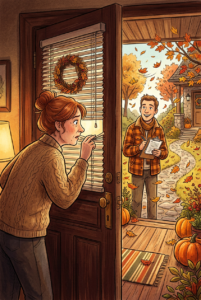
Fall has a way of turning neighborhoods into hunting grounds — the leaves start dropping, the temperature dips just enough to make you think about your furnace, and suddenly every driveway in America has a stranger standing in it with a clipboard and a smile. This summer alone, we had two of them show up on our doorstep, unannounced, unvetted, and blissfully unbothered by the “No Soliciting” sign at the entrance to our neighborhood. First came the pest control guy, then the roofer. Both delivered some version of the same line with the practiced cheerfulness of a man who has said it fifty times that day: “My company’s already working in the neighborhood, so we wanted to offer you a special deal while we’re here.”
Sorry, guys, but you’re dealing with a mystery writer. Yep, I started thinking like my amateur sleuths and began building a case file. Was the roofer legit? Was the exterminator? Honestly, I have no idea — and that’s exactly the problem. The pest control guy looked like an earnest college kid—perfectly nice, perfectly legitimate. That’s the trouble with home repair scams — the good ones don’t look like scams at all. They look like a nice young man in a company polo who just happened to be in the neighborhood.
How the Home Repair Scam Works — And the Signs You’re In One
Here’s the thing about unpredictable weather. It means more storms, more heat damage, more urgency — more opportunities to cash in. Our roofer offered a discounted “inspection.” The pest guy claimed the neighbors were suddenly overrun with spiders because their current exterminator was slacking. These are classic lines. Manufactured urgency playing on the fear that everyone else knows something you don’t. Once you agree, the scam usually plays out one of two ways: the price creeps up once the work has started, or they do a quick, shoddy job, collect payment, and vanish before you notice the leak, the gap, or the bugs that never actually left.
Here’s what should make you pause:
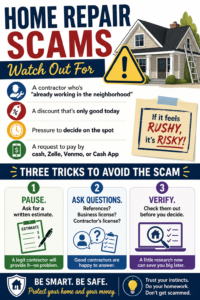
- A contractor who’s “already working in the neighborhood” and just happens to knock on your door
- A discount that’s only good “today” — manufactured urgency is the oldest trick in the book
- Pressure to decide on the spot, with no time to check references or get a second quote
- A request to pay by Zelle, Venmo, or Cash App instead of a credit card. These apps aren’t unsafe, exactly — they just don’t offer the fraud protection a credit card does.
Three Tricks to Avoid Any Scam
I laid out three simple rules for dealing with any scam earlier this year, and they work just as well against this low-tech, knock-on-your-door variety.
Tip 1: The Pause. If you’re dealing with a legitimate contractor, they shouldn’t have a problem waiting for you to make a decision. Tell them you can’t decide right away, but you’ll consider their written estimate.
Tip 2: Ask Questions. Will they provide a written estimate? Who are their references? What’s their business license number? Are they bonded and insured? The list will vary by situation, but legitimate contractors expect these questions, so don’t be afraid to ask.
Tip 3: Verify. Now comes the hard part — checking those references and licenses. Start with BBB.org; a legitimate contractor should be listed there. You can also verify a state contractor’s license through your state’s licensing website.
In the end, I didn’t hire the roofer or the pest control guy — not because I caught either of them in a lie, but because a good detective never signs anything until the questions are answered.
I’d love to hear your thoughts on this month’s scam tip. Please leave a comment below, and thanks for being here!
See all my Scam Tips here. If you missed last month’s post, you can use this link to view Anthropic Lawsuit Scam: 5 Ways Scammers Are Targeting Writers.