
Like a vintage shirt, older in life can equal more complicated. For instance, over the past couple of years, my wife has started managing her aging mother’s finances. That includes the dubious honor of sending out the birthday checks. You probably are familiar with it. It’s that tradition of combining parental generosity with the thrill of feeling like you’re rich for a day.
In any case, just as Kathy was getting the list together, she came across a warning about sending checks through the mail. Who knew? Tthe decidedly retro scam known as check washing isn’t just alive and well. It’s doing a booming business.
That’s right. Nothing says vintage like good old-fashioned mail fraud.
How the Scam Works
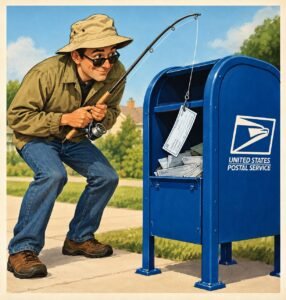
Most check-washing scams start when someone steals a check from a residential mailbox. But thieves also target blue USPS collection boxes. And you thought those boxes were secure, right? It turns out, those boxes make good fishing holes for the bad guys. Even worse are the bold ones. Those are the ones who steal from the inside of the post office.
In fact, that’s exactly what happened to us when we lived in Alameda. We’d ordered new checks, which arrived sooner than expected. Our mail was on hold, and a thief grabbed the entire box. He sold the checks, and suddenly, a fake me was spending money like there was no tomorrow. Based on the purchases, the fake me had better shopping tastes than me. He also had a complete disregard for our bank balance.
If thieves can’t get their hands on unused checks, they can always wash the ones they’ve stolen. Using chemicals such as bleach or certain solvents, they erase the payee’s name and the written amount. The “new you” can easily write in a new payee and a much larger amount. If the check clears, the money disappears into the thief’s account before you realize anything is wrong.
Based on personal experience, I can tell you this is not a long drawn out scam. It’s over in a matter of days. In our case, the thief’s shopping spree tripped him up, though. He got greedy and went back to pick up the super-duper stereo system he’d ordered. Turns out, spending someone else’s money can be fun right up until it isn’t.
How to Avoid the Scam
Tip #1: Don’t Leave Checks Where Thieves Can Grab Them
Your residential mailbox may be convenient, but it isn’t a bank vault. If someone can reach in and pull out an envelope, there’s not much standing between your check and a criminal with a business plan.
If you’re mailing a check, the safest approach is to hand it to a postal employee or deposit it inside a secure, authorized USPS collection location. Still planning to use one of those blue collection boxes? Check its posted pickup times and collection schedule to reduce the time your mail sits waiting. This won’t eliminate the risk of theft, but it does improve your odds.
And remember: Just because a collection box has a federal eagle on it doesn’t mean your check is protected by a force field.
Tip #2: Still Determined to Write Checks? Choose Your Pen Wisely.
If you’re going to write checks, use a blue or black, fraud-resistant gel pen. Some gel inks bond with paper fibers and are more difficult to remove than conventional ballpoint ink.
Will this prevent someone from stealing your check? No, but it will make altering the check more difficult. Think of it as locking your front door. It won’t stop every determined burglar, but it may make the job harder.
One important caveat: Not all gel pens offer the same protection, so look for ink specifically marketed as fraud-resistant.
Tip #3: Embrace Electronic Payments
The simplest way to avoid check washing is to avoid mailing checks.
Pay bills online through your bank or use a trusted electronic payment service. Mobile banking apps can also make it easier to manage payments without sending paper through the postal system.
For purchases, consider using a credit card. Credit cards generally offer stronger protections against unauthorized purchases than debit cards, although the details depend on the circumstances and applicable law.
The Bottom Line
We’re still deciding how to handle those birthday checks. There is something satisfying about a good old-fashioned check tucked inside a birthday card. It’s a tradition, and traditions are hard to give up. But so is your money. Somehow, we’ll figure it out.
One last thing: if you receive a notice about suspicious activity on your bank account, contact your bank immediately. The alternative is letting your life become a complicated nightmare. And isn’t life complicated enough already?
If you liked this scam tip, I encourage you to share this with an older parent or relative. Check fraud is a good example of why a scam doesn’t have to involve artificial intelligence or sophisticated technology to cause real damage. Thanks for being here!
See all my Scam Tips here. If you missed last month’s post, you can use this link to view Those Pesky Spammy Phone Calls.



Leave a Reply